
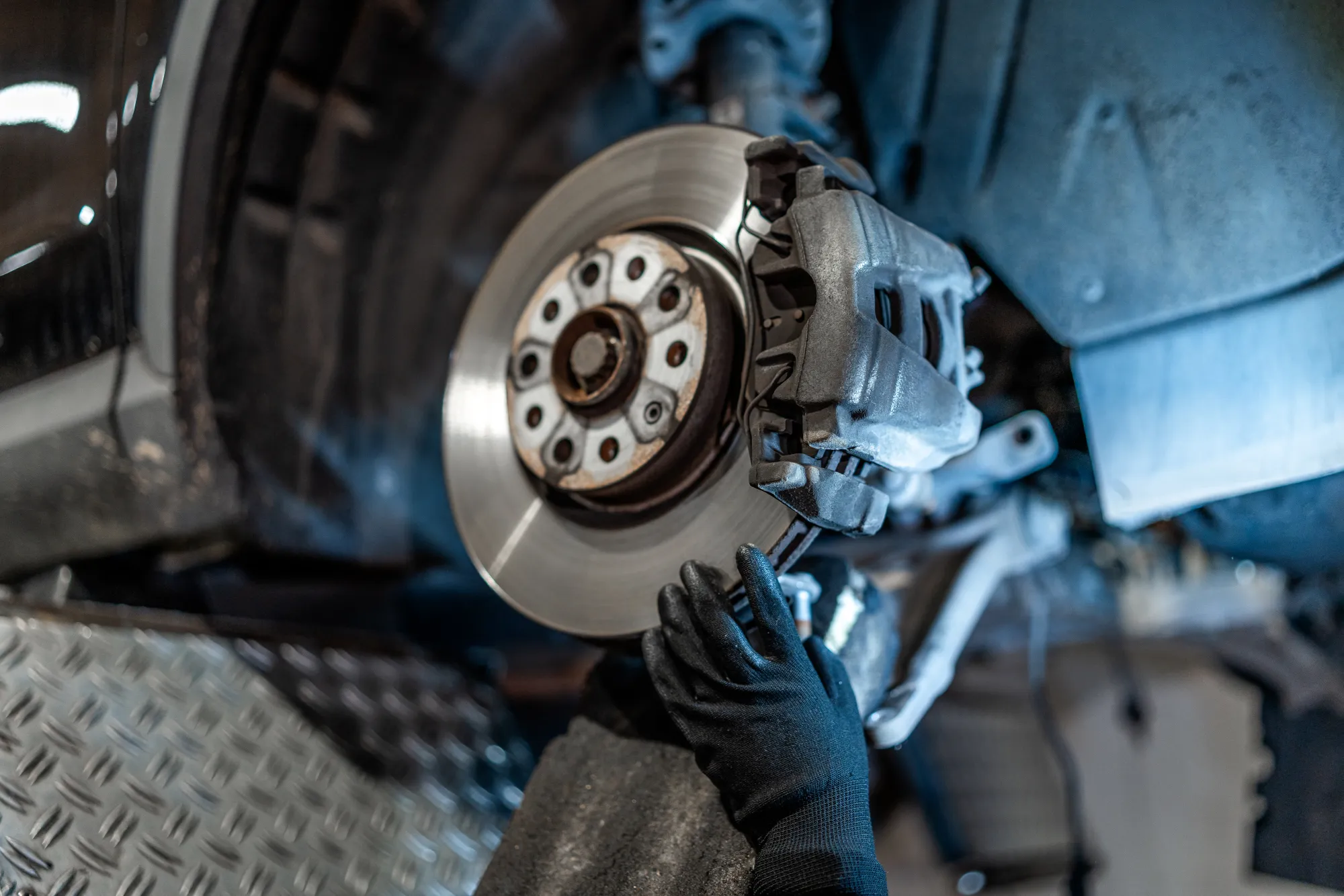
Yes. Brake hose replacement requires bleeding because disconnecting the hose opens the hydraulic circuit and allows air to enter. Installing the replacement hose is only part of the repair; the applicable bleeding procedure removes introduced air before the brake system is checked for proper operation.
For Lumberton drivers, the next question is how much bleeding their particular vehicle needs. The answer comes from its service instructions: those determine which wheels or circuits need attention, the sequence, the equipment, and whether an antilock brake system (ABS) routine is required. There is no universal one-wheel or four-wheel rule for every hose replacement.
Why does opening a brake hose require bleeding?
Brake fluid transfers force from the pedal through the hydraulic system. Replacing a flexible hose means disconnecting part of that fluid circuit. Even when the new hose has been fitted, air introduced during the work still needs to be addressed.
NAPA’s technical bulletin on bleeding vehicles with antilock brakes identifies opening the brake system for repairs as a way air can enter. It also discusses a spongy pedal and the need to follow the vehicle’s service instructions. That makes bleeding part of finishing the hydraulic repair, rather than an optional response only if the driver notices something afterward.
A replacement hose and a completed brake repair therefore describe different stages of the job. The hose restores the connection; bleeding and verification address the system after that connection has been opened. A customer should expect the repair explanation to cover both stages.
Simply seeing fluid in the reservoir does not answer whether the required bleeding steps have been completed. Reservoir level, air removal, and pedal verification are separate checks in the manufacturer procedures discussed below. Each serves a purpose, so one should not stand in for the others.
Does replacing one hose mean bleeding one wheel or all four?
The number of hoses replaced does not, by itself, establish the correct bleeding scope. The technician needs the procedure for the vehicle and the repair being performed. A generic instruction to bleed only the nearest wheel, or automatically bleed all four in a familiar order, can miss what those instructions actually require.
The useful questions are specific:
- Which wheels or hydraulic circuits does the applicable procedure require bleeding?
- What sequence and bleeding equipment does it specify?
- Does it call for an ABS routine using a scan tool?
- What checks establish that bleeding and the repair are complete?
These questions explain why two hose replacement jobs may involve different steps without either being described accurately by a universal recipe. The relevant comparison is between the work performed and the instructions for that vehicle.
Ford provides a concrete, limited example. Its rear flexible-hose replacement instructions for certain Edge and MKX vehicles direct technicians to workshop-manual procedures and address restoring pedal feel and height after bleeding. The document concerns certain 2015-2018 Edge and 2016-2018 MKX vehicles. It demonstrates that hose replacement includes attention to bleeding and pedal condition; it does not establish a bleeding sequence for other models.
Does ABS change the bleeding procedure?
It can. NAPA’s bulletin explains that some ABS bleeding procedures involve using a scan tool to cycle the system’s pump and valves. Whether that step applies must come from the vehicle-specific instructions.
Having ABS does not justify assuming that every hose replacement requires the same scan-tool operation. It also does not justify assuming that an ordinary bleeding routine is sufficient for every vehicle. The service procedure resolves that question.
For the owner, this means the repair explanation should identify any required ABS step and why it applies. A general statement that “the brakes were bled” may leave out useful detail when the manufacturer’s instructions call for additional operations.
An ABS warning or unusual brake behavior should not automatically be attributed to air from a hose repair. The shop’s separate article on false ABS activation at low speeds on dry roads addresses a different symptom question. During hose replacement, the task is to follow the required bleeding procedure and investigate any unresolved warning or operating concern.
What should be checked after the hose is replaced and bled?
Bleeding is necessary, but completion also requires verification. The vehicle’s repair instructions govern the installation review and final checks. Removing air does not replace checking for leaks, confirming fluid level, or assessing pedal operation.
GM’s brake-line repair procedure illustrates how those checks fit together. Although it concerns a specific brake-line repair rather than a universal hose replacement process, it specifies recommended fluid, maintaining reservoir level during bleeding, and bleeding until bubbles stop. It then includes leak inspection, final fluid level, warning-light and pedal checks, and verification of low-speed operation before test driving.
For a customer reviewing a hose repair, those categories provide a useful way to understand the completion checks:
- Fluid: The specified fluid and final reservoir level are addressed under the applicable instructions.
- Leaks: The repaired system is inspected rather than judged only by pedal feel.
- Pedal: Feel and operation are checked after bleeding; Ford’s example also addresses pedal height.
- Warnings: Brake-system warning indications are checked.
- Operation: The required operating verification follows the manufacturer’s procedure.
These are completion criteria, not a substitute for a service manual or a do-it-yourself bleeding sequence. They help explain what a finished repair should account for without prescribing equipment or steps that may be wrong for a particular vehicle.
What if the pedal still feels spongy after replacement?
A spongy pedal after the work calls for further evaluation. NAPA identifies spongy pedal feel as a concern associated with air in the hydraulic system, but pedal feel alone does not establish the cause or specify the next repair.
The appropriate response is to review the bleeding procedure, required ABS operations, leaks, fluid level, and the manufacturer’s pedal checks. The owner should describe what feels different and when it occurs. Treating an unresolved pedal concern as an expected adjustment after hose replacement would leave the repair’s verification unfinished.
Mike Smith Tire & Auto in Lumberton lists brake hose replacement, brake fluid inspection and replacement, brake inspections, and ABS diagnostics and repair. For this repair, the useful service explanation is straightforward: which hose was replaced, which bleeding procedure applied, and what checks confirmed proper operation afterward. Those details answer whether the hydraulic work was completed beyond installing the new part.