If you notice your engine oil level rising between oil changes, first confirm that you are measuring it consistently. A high reading can reflect the checking procedure or an earlier overfill. A repeatable increase after a confirmed normal reading can point to fuel or coolant entering the oil. For Lumberton drivers, the useful next step is to establish which situation applies before choosing a repair.
The dipstick measures level; it does not identify what is in the crankcase. Start with a careful recheck, review the last oil service, and have a confirmed rise evaluated. Simply draining the level back down may leave contamination and its cause unresolved.
Confirm the reading before calling it a rise
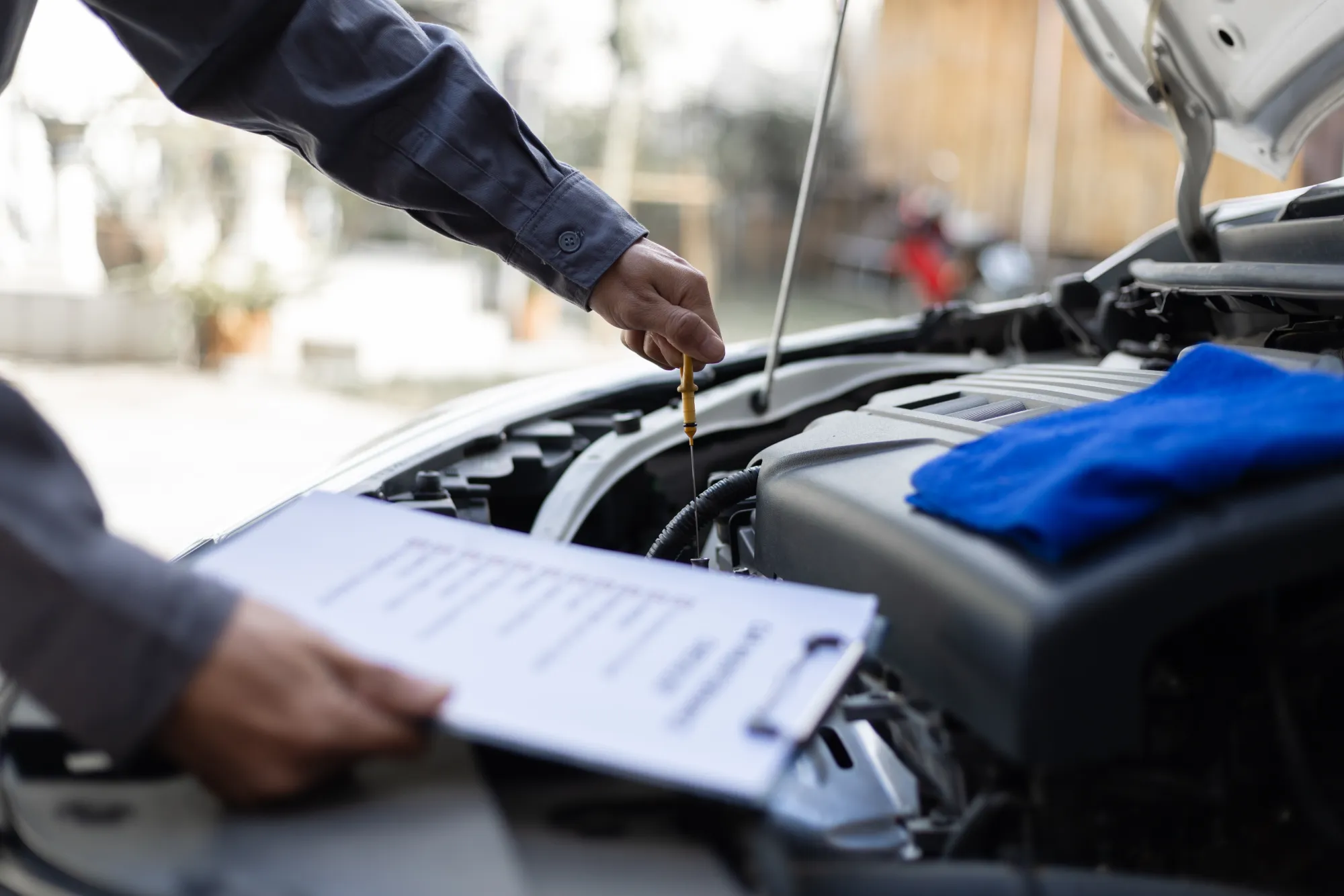
Use the oil-check instructions for your vehicle’s exact engine. Park on level ground, switch the engine off, and follow the specified temperature and waiting period. Wipe the dipstick, insert it fully, then withdraw it to read the level.
Do not assume one waiting period works for every vehicle. For example, Ford’s oil-check guidance warns that checking too soon can produce an inaccurate reading.
Before comparing today’s mark with an earlier one, ask:
- Was the vehicle parked on level ground both times?
- Were the engine temperature and waiting period consistent?
- Was the dipstick wiped and fully seated?
- Did anyone add oil during another visit or maintenance check?
If the mark is smeared or unclear, repeat the procedure instead of treating the highest streak as a reliable measurement. Record the date, mileage and a clear photograph once you have a repeatable reading.
One high reading establishes a need to recheck. Comparable readings that move upward establish a trend. Do not keep driving just to collect more data when the level is already above the permitted range.
Was it overfilled, or is the level actually increasing?
Timing helps separate the possibilities.
High immediately after an oil change: Start by checking the service record and the engine’s specified fill quantity. An overfill belongs on the list, but a first reading taken weeks after service cannot establish when the level became high.
Normal after service, then progressively higher: A documented increase deserves investigation for fluid entering the crankcase. Removing the excess does not tell you whether fuel or coolant caused it.
Different readings under different conditions: Return to a consistent checking procedure before drawing conclusions about a mechanical fault.
Give the technician your observations and let the checks establish the cause. Ask for the measured level and findings to be recorded before any correction.
Could fuel dilution explain the higher level?
Fuel dilution means fuel has mixed with engine oil. It can add liquid to the crankcase while reducing the oil’s viscosity, or resistance to flow.
Ford notes that frequent short trips and prolonged idling can contribute to rising levels. That makes your driving pattern useful diagnostic information, but it does not prove that driving habits explain a particular vehicle’s increase.
ExxonMobil’s lubricant analysis guide identifies incomplete combustion, defective injectors and leaking fuel pumps among possible contributors to fuel dilution. Which checks apply depends on the engine.
Tell the technician about repeated short runs or extended idling. Ask whether the evidence calls for checking injector leakage, seals or a pump that could introduce fuel into the oil. A suspected injector problem needs confirmation before replacement.
Do not try to settle the question by adding thicker oil or taking a long drive to see whether the level drops. Neither establishes why the increase occurred.
Could coolant be entering the oil?
Coolant contamination is another possibility, and it calls for a different investigation. Bring any observations about coolant loss or changes in oil appearance, but do not treat appearance alone as a test.
Mobil explains that coolant can leave chemical traces even after its water component is no longer present. Its diagnostic guidance includes cooling-system pressure testing and inspection of the head gasket and oil cooler or heat exchanger, where fitted.
A head gasket is therefore one possibility, rather than a conclusion you can draw from a high dipstick reading. Ask what evidence identifies the leak path before authorizing that repair. Likewise, a normal-looking dipstick should not end an investigation when the documented level keeps rising.
The practical question is whether contamination is present and where it is entering. The repair should follow those findings.
What should be checked before the oil is changed?
Tell the shop about the increasing level before a routine oil change begins. Ask whether a sample should be retained before the existing oil is discarded.
A useful diagnostic sequence is:
- Verify the measurement and service history. Establish the current level, oil specification, recorded fill quantity and whether there was a reliable earlier baseline.
- Decide whether oil analysis would help. Follow the chosen laboratory’s sampling instructions and provide mileage and oil-service information.
- Investigate the suspected source. Use findings to guide fuel-system or cooling-system checks appropriate to the engine.
- Plan the oil service and follow-up. Record the corrected level and agree on how it will be rechecked.
Blackstone Laboratories’ report guide explains how viscosity, flashpoint, fuel, antifreeze and water results help assess oil condition. Coolant-related elements need context because some also occur in oil additives. An analysis can help identify contamination; it does not, by itself, name the failed component.
These are diagnostic options, not a claim that every vehicle needs every test. Mike Smith Tire & Auto lists engine diagnostics, fuel-system work, radiator services and oil changes. Ask which findings justify the proposed work and whether outside laboratory testing is needed.
When requesting an evaluation, describe the rising level specifically, as you would when asking for a vehicle inspection. This gives the technician a clear concern to investigate.
Should you keep driving or just change the oil?
A confirmed above-maximum reading needs prompt assessment. Ford warns that excessive oil level can cause engine damage. Ask whether the vehicle should be transported rather than driven; there is no universal safe mileage allowance based only on dipstick height.
If the oil-pressure warning comes on while the engine is running, stop safely and switch the engine off. A high oil level does not establish adequate oil pressure.
An oil and filter change may be part of the corrective work. If contamination is suspected, however, the plan also needs to address its source. Preserve a sample when useful without delaying necessary action while waiting for a laboratory result.
After the level is corrected and any identified cause is addressed, establish a documented baseline using the owner’s-manual procedure. Agree on a recheck interval with the technician. If the level rises again, that record provides a clearer starting point for the next diagnostic decision.